
Residential Electric Water Heaters
American offers more than 100 electric water heater models. From ENERGY STAR® certified high-efficiency options to affordable standard-efficiency units, there’s an American electric water heater for every home.

Rebates & Tax Credits
Local utility rebates available in limited geographical areas. For information on the Federal Tax Credit, go to: energystar.gov. Check with your tax advisor for applicability. Offer details and expiration may vary. See Rebate Center for details.
What Our Customers Are Saying


- ENERGY STAR® certified
- Plugs into standard 120V outlet
- 10-Year limited warranty

"So quiet, you would never know it's running."

- ENERGY STAR® certified
- Save up to 73% on annual energy costs
- 10-Year limited warranty

“We needed to replace our old water heater, and knew to only buy from American"

- Dual 5500-Watt Heating Elements
- Highly efficient with UEF of 0.94
- 8-year warranty

"My electric water heater is so reliable now"

- Dual 5500-Watt Heating Elements
- Highly efficient with UEF of 0.92
- 8-year warranty

"WOW, I never knew I would fall in love with a water heater"
Benefits of Electric Water Heaters

No Venting Required
A huge perk of owning an electric tank water heater is that no venting is required, making this a great option for any home.

Easy Installation
Electric water heaters are quick and easy to install for any home when replacing a similar model with the same electric power needs. American recommends consulting a professional installer for a speedy and proper installation.

Long Lasting
American electric water heaters come with various limited warranties to guarantee your home with hot water for years to come.
How it Works
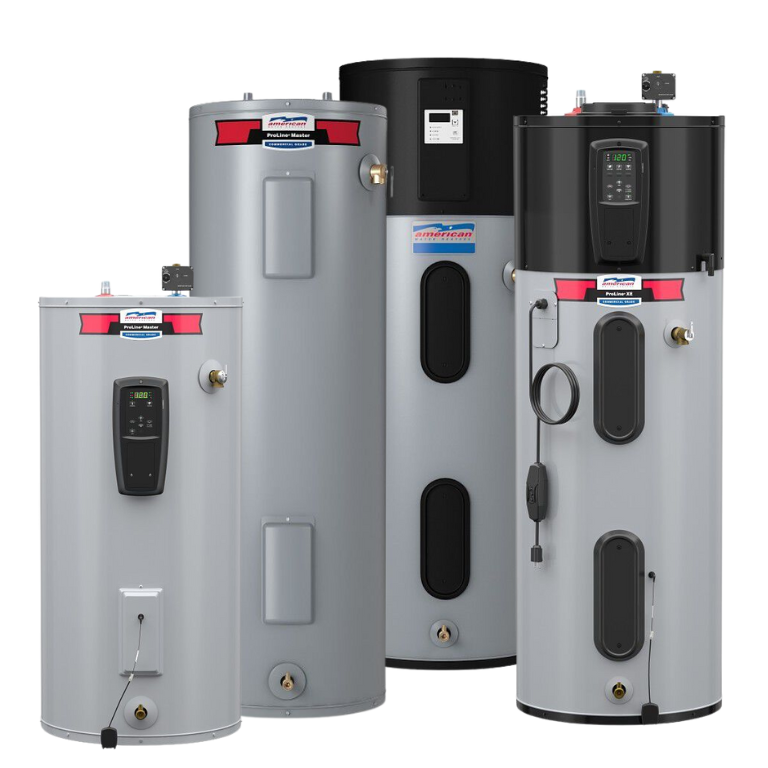
Electric water heaters use electricity to supply hot water throughout your home.
Tank models store and heat water using one or two electric heating elements inside an insulated tank. Cold water enters through a dip tube near the bottom, where the elements warm it. As it heats up, the water rises toward the top. When you open a hot water faucet, water pressure pushes the heated water through your plumbing while cold water flows in to replace it.
A thermostat tracks the water temperature and turns the heating elements on and off to keep your water at the right temperature. Standard electric models use resistance heating elements, while hybrid heat pump versions pull heat from the air around them for better efficiency. Electric water heaters include thermostats to control temperature, temperature and pressure relief valves to release excess pressure, and drain valves for maintenance. These parts work together to keep the system running safely and reliably.
Still Have Questions?
The choice between electric and gas usually comes down to what your home is already set up for. Most people stick with whatever energy source they currently have because switching can be expensive. If your home doesn't have a gas line, running a new one isn't cheap. Similarly, if you already have gas lines installed, switching to electric doesn't make much sense. Both types work well—it's really about what's practical for your home's existing setup.
Watch for these common warning signs: rusty or discolored water coming from your taps, visible corrosion or rust on the tank itself, rumbling or popping noises during operation, water that doesn't get as hot as it used to, or puddles forming around the base of the unit. If your water heater is 8-10 years old and showing any of these symptoms, replacement often makes more sense than repair. Older units also tend to waste more energy, which shows up as higher electric bills.
Electric water heaters don't need venting or gas lines since they don't burn fuel or create exhaust. This makes installation simpler and gives you more flexibility on where to place the unit. They typically cost less upfront than gas models of similar size, and they're generally easier to maintain since there are fewer components that can fail.
No. Electric water heaters don't require any venting because they don't produce combustion gases or exhaust. They simply use electricity to heat water through heating elements, so there's nothing that needs to be vented outside. This is one of the main advantages over gas water heaters.
Most electric water heaters last 8-12 years with proper maintenance. Regular maintenance helps extend lifespan—flush the tank annually to remove sediment buildup, check the anode rod every few years, and watch for early warning signs of problems. Homes with hard water may see shorter lifespans without water treatment, since mineral deposits cause extra wear on components.
Standard Electric Tank vs. Hybrid Heat Pump
Both standard electric tank and hybrid heat pump water heaters store hot water in an insulated tank, but they heat water differently and have distinct advantages
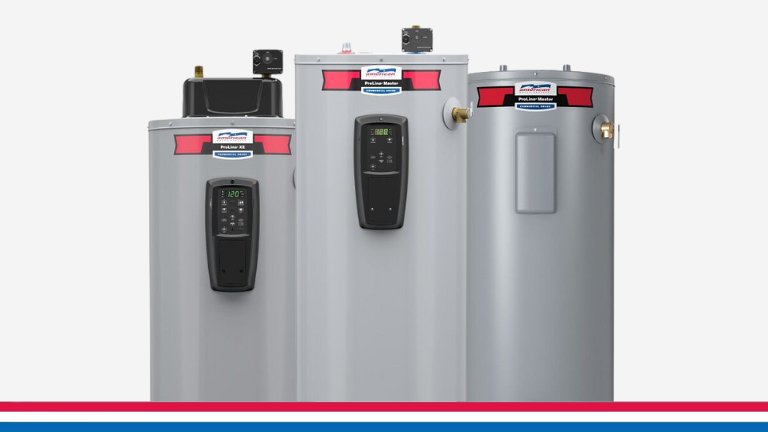
Standard Electric Tank Water Heaters
Use heating elements that create heat through electrical resistance—similar to how a toaster works. They fit in most spaces, cost less upfront, and need only basic electrical connections and plumbing. They're a solid choice for homes with limited space or tighter budgets.

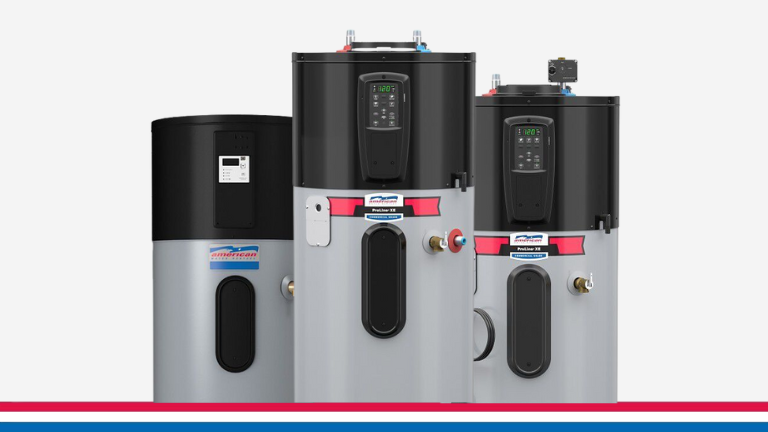
Hybrid Heat Pump Water Heaters
Pull heat from the surrounding air and transfer it to the water, working like a refrigerator in reverse. They use about 70% less electricity than standard models, qualify for ENERGY STAR certification, and may be eligible for federal tax credits and local utility rebates. These models require at least 450 cubic feet of air space around the unit and work best in basements, garages, or larger utility rooms. While they cost more upfront, they deliver significant long-term savings through lower energy bills.
Featured Products
- ENERGY STAR® certified
- Plugs into standard 120V outlet
- 10-Year limited warranty
- Dual 5500-Watt Heating Elements
- Highly efficient with UEF of 0.93
- 8-year warranty

- Dual 4500-Watt heating elements for fast recovery
- Self-Cleaning Dip Tube—Reduces lime and sediment buildup
- 8-year warranty
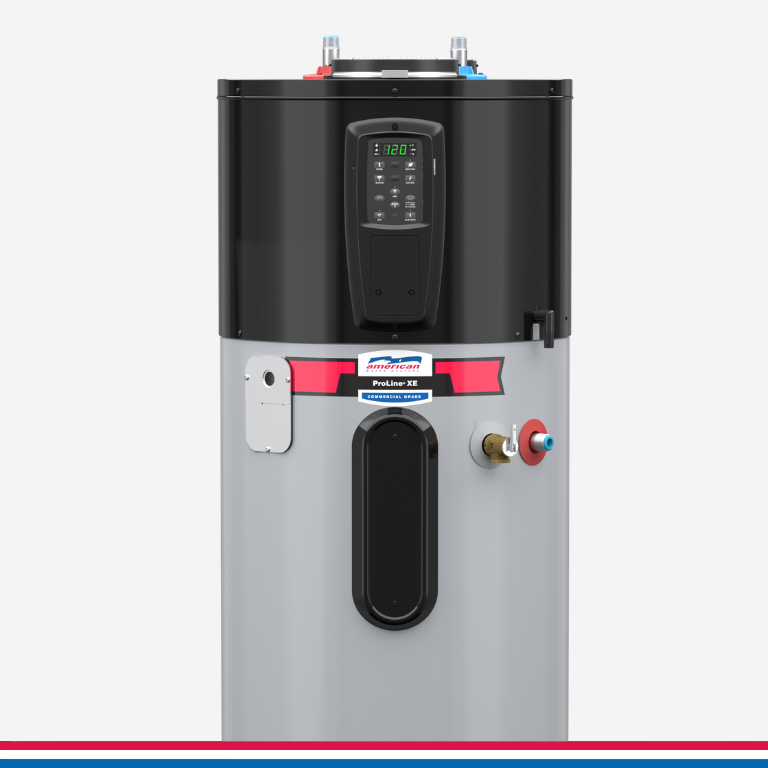
Hybrid Electric Heat Pump Tank Water Heaters
American’s hybrid electric heat pump water heaters are ENERGY STAR® certified, harnessing heat from the surrounding air to efficiently warm your water, reducing operating costs and maximizing savings.
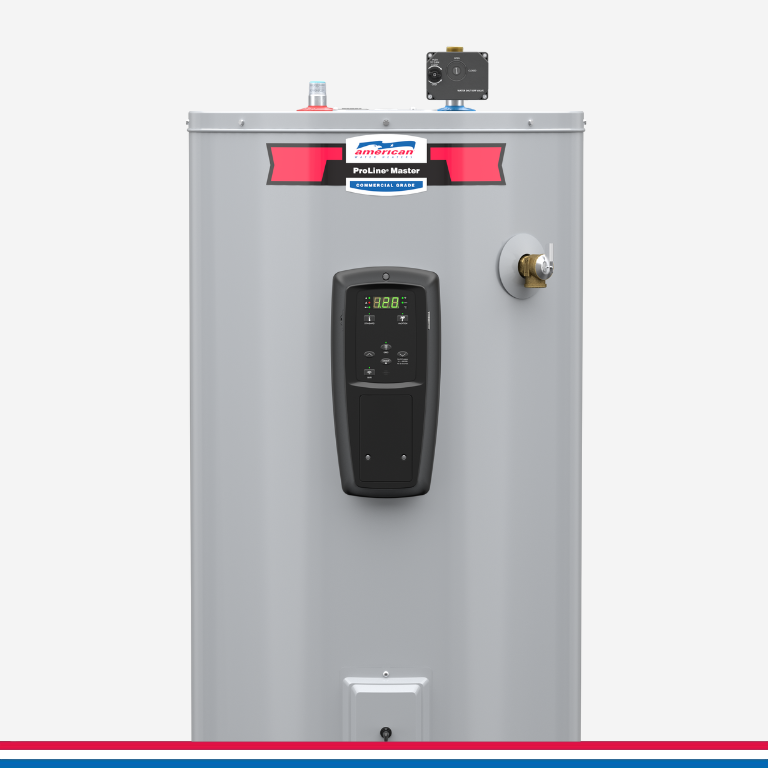
Standard Electric Tank Water Heaters
Discover what model is right for your home. Compare energy efficiency, warranty length, and more.




Why American Water Heaters?
American Water Heaters is one of the nation’s largest manufacturers of water heaters. American is proud to offer a full line of residential and commercial, gas and electric water heaters to meet the needs of the plumbing professional.
American’s dedication to research, development, and sound engineering principles ensure the consistent performance and reliability of our water heating products. Quality and durability you can rely on—year after year.
American is committed to being a reliable partner by providing well-built products and superior customer service, offering customers unmatched product support.
Learn more about how you can partner with American Water Heaters.